Loop analysis
How a Tribute Round Actually Runs
Round one is the tutorial. Every round after it raises the bar, and the team decides whether to split.
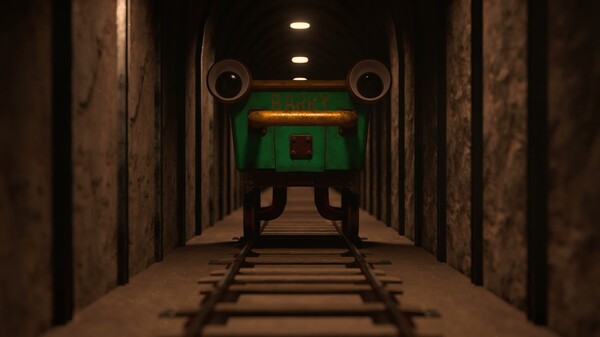
The loop is laid out plainly across a full playtest: the first round is treated as a tutorial, and the quota starts low and climbs with each subsequent round. The team is told the target and then immediately has to make the decision that defines the mode — split up and cover more ground, or stay together and cover less.
Both answers are defensible, which is why the mode works. Splitting multiplies the ground you can search and divides the number of people who can respond when something goes wrong. Staying together is slower and safer until it is not: a single chase through a corridor with the whole team in it is a much worse outcome than a chase with one player in it.
The honest summary is that the quota is a pacing device rather than a number to memorise. It exists to make the team keep going back into the building after the sensible moment to leave, and the round structure is designed so that the sensible moment arrives earlier each time.
That structure also explains why the mode rewards a team that renegotiates rather than one that picks a strategy at the start. Splitting is correct while the facility is unsearched and the clock is generous; it becomes the wrong answer the moment a quota is nearly met and the remaining risk is concentrated in the walk back. The shift that fails is usually not the one that chose badly, but the one that never revisited a choice that made sense ten minutes earlier.
Poison is a separate status from damage, and the session that explains it does so in one line: when she hits you, she stings you, and the sting can only be cleared by finding an antidote. That makes the cat enemy a supply problem rather than a health problem - a medkit does not answer it, a teammate does not answer it, and the antidote has to be found in the building while the clock is still running. Teams that treat every red bar as the same red bar end up burning healing items on a condition those items cannot touch.
Items are throwable, and the session treats that as the standard way to hand something to a teammate across a gap: throw an item at me, and it arrives. That is a bigger deal than it sounds, because it means a player who is cornered or standing on the far side of a drop can still contribute - a battery, a part or a heal can cross a room without anybody walking into it. The counter-risk is the same physics working against a team: a thrown item that misses is a resource on the floor, and a thrown item in a dark room is a resource nobody can find.
Hiding is the evasion the game gives you that is not running. A recorded walkthrough puts it plainly - another way to evade her is by hiding - and the same session shows a player choosing to switch off their flashlight so they are not the one she notices. The two verbs belong together: the light is what makes you findable, so the hide and the dark are the same action taken in a different order. That is why the room-clearing habit from earlier rounds pays off here - a team that knows which lockers and vents exist does not have to invent a hiding place while something is already walking toward it.
The end of a round is a hand-in, not a finish line. A player asks whether everyone put everything in, which is the question that decides whether the shift counted, and the answer is often that somebody is still holding a part they meant to bank. The routine that survives contact with a timer is boring: before the last stretch, everybody says what they are carrying out loud, and the group treats the walk back as part of the objective rather than the reward for finishing it. Sessions that skip that step watch a full cart and an empty inventory turn into a failed quota because one player was two rooms away when the clock ended.
Evasion and recovery sit on opposite sides of the same rule. The stalking enemy can be hidden from, the cat can be outrun and then poisoned, and the antidote for that poison is somewhere in a building whose layout moves between rounds. None of those are things a team can plan in advance, which is why the honest advice for a new lobby is procedural rather than tactical: carry one antidote if you find it, keep the flashlight off when you are not the one looking, and decide who is going back for a body before anybody needs to.
Sources on record
-
The first round is presented as a tutorial and the quota rises on later rounds.
Tier 3, creator footage / checked 2026-10-19
-
Teams decide between splitting up and sticking together.
Tier 3, creator footage / checked 2026-10-19
Source identifiers, capture dates and the raw quoted lines are held in this site's research record rather than reproduced on the page, so each claim above can be checked against the original without the page itself standing in for the source.