Comms discipline
Proximity Voice as the Real Sensor
Positional voice is finite, asymmetric and the only channel that keeps working when the screen goes dark.
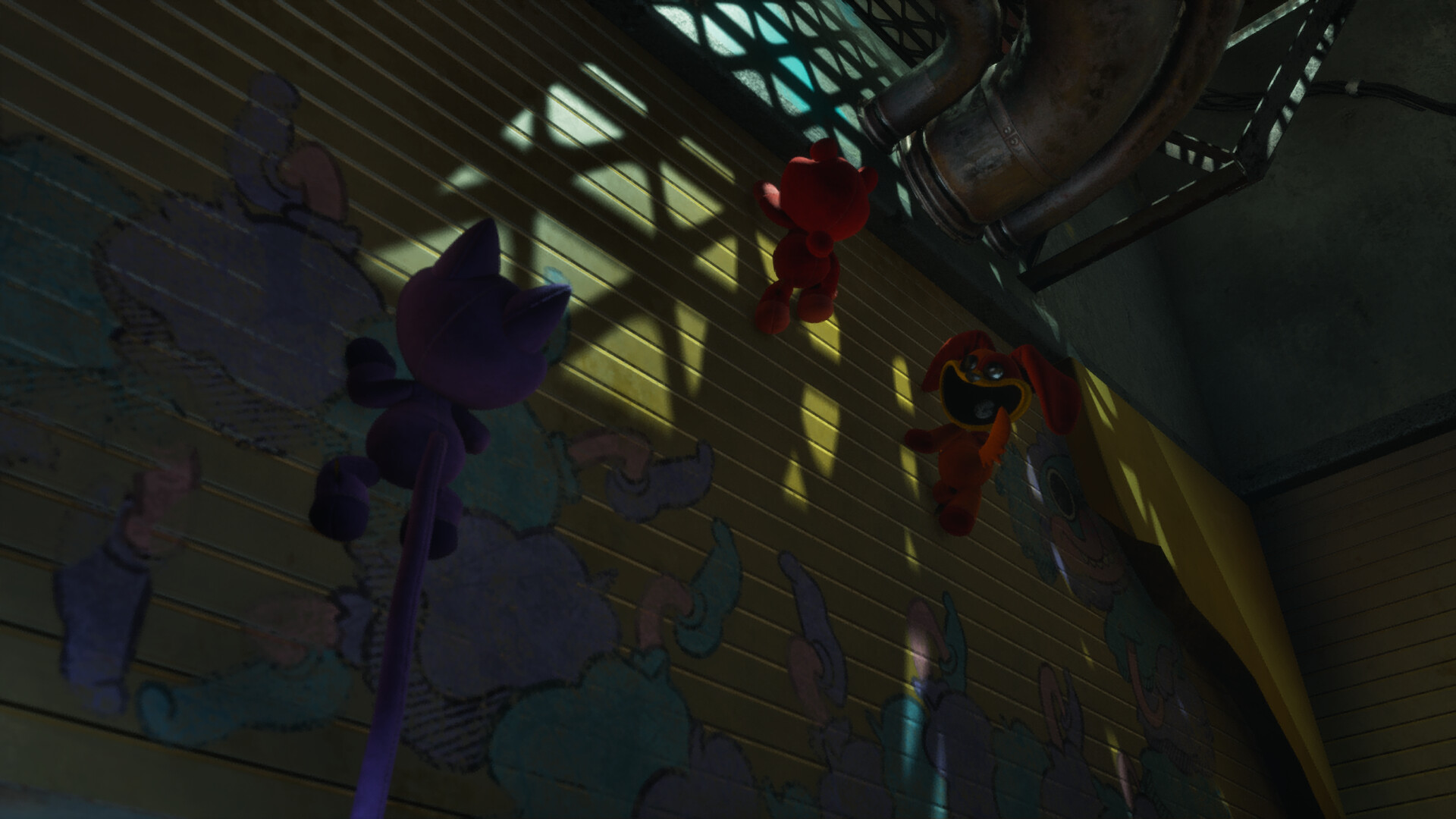
Proximity voice is not a social feature bolted onto a co-op game; in recorded play it is the sensor the team actually navigates with. Players describe the arrangement out loud - we are supposed to sound like robot speaker voices, one of them says, and the joke is accurate: the voices are positional, so a callout carries a direction as well as a fact. That is why a group with good microphones and bad habits still gets lost, and a quiet group gets lost faster.
The range is finite and the failure is specific. A player who has gone down reports that the others can hear them, then corrects themselves - no, they cannot - and works out that being heard depends on where the listener is standing. The practical consequence is that a lobby cannot treat voice as a radio. Information has to be repeated by whoever moves into range, which means the useful habit is not saying more but saying it again when you cross a room.
Three sentences do most of the work, and they are boring on purpose: where you are, what you are carrying, and whether the room is clear. A session shows the cost of skipping them - one player asks whether a gate was already closed, another cannot open it, and neither knows which of them is describing the same door. Naming rooms rather than directions fixes this, because left and right are the two words players disagree about most.
Light is a team-level decision, not a personal one. A player jokes about switching off their flashlight and getting a teammate killed, and the joke holds up mechanically: darkness hides you from the thing hunting you and hides your teammate from you at the same time. That makes the flashlight a shared resource with a shared cost, so the call to go dark has to be said out loud - a silent blackout is indistinguishable from a player who wandered off.
Division of labour fails in a way that voice alone does not fix. One player complains about solving all the puzzles for a party that is not helping, and the complaint is fair: a group where one person holds all the knowledge has one point of failure and no redundancy. The pattern that survives is a rotation - whoever is closest does the interaction, whoever is not says what they are doing - so the information lives in the group rather than in one head.
The social layer carries real information, which is why the banter is not noise. A player asking whether something is going to hurt them, a teammate yelling a name across a room, a group deciding to go back and take the loss - all of that is coordination wearing a joke. The risk is the opposite case: a lobby that is funny and vague transmits mood without position, and the first time somebody needs to be found, mood is not a location.
Death creates an information asymmetry that voice has to account for. Downed players describe hearing the group and not being heard, and one of them reasons out loud that the return is tied to being carried rather than to asking. A team that understands this stops asking the dead for directions and starts reading the icon on the screen, which is the one channel that keeps working when the voice channel does not.
A silent lobby is the failure mode all of this is written against. Recorded sessions of successful runs are loud in a specific way - short, positional, repeated when somebody crosses a room - and the runs that fall apart are the ones where the last useful sentence was said four rooms ago. The habit worth building on the first night is not chatter but cadence: a call every time you enter a room, every time you pick something up, and every time you go dark.
Sources on record
-
Voice chat is positional and the group treats it as the primary coordination channel.
Tier 3, creator footage / checked 2026-10-20
-
A downed player can hear the group but is not always heard in return.
Tier 3, creator footage / checked 2026-10-20
-
One player ended up solving the puzzles for a party that was not helping.
Tier 3, creator footage / checked 2026-10-20
-
Switching off a flashlight can get a teammate killed.
Tier 3, creator footage / checked 2026-10-20
-
Coming back is tied to being dropped off rather than to asking.
Tier 3, creator footage / checked 2026-10-20
Source identifiers, capture dates and the raw quoted lines are held in this site's research record rather than reproduced on the page, so each claim above can be checked against the original without the page itself standing in for the source.