Field notes
The First Night: Voice Chat Is the Real Mechanic
Recorded co-op play makes the case that proximity voice does more work than any tool in the kit.
A recorded co-op session makes the pattern obvious within a few minutes: almost every tense beat is resolved by somebody saying something. A player announces smoke, another answers from a different room, a third lies about the water being fine. The monsters are the reason the talking matters, but the talking is the content.
That has a practical consequence for a new lobby. Before the first door, agree on three sentences: where you are, what you are carrying, and whether the room is clear. Groups that skip that step do not fail because they are slow — they fail because two players make the same decision in different rooms and neither one knows the other exists until it is loud.
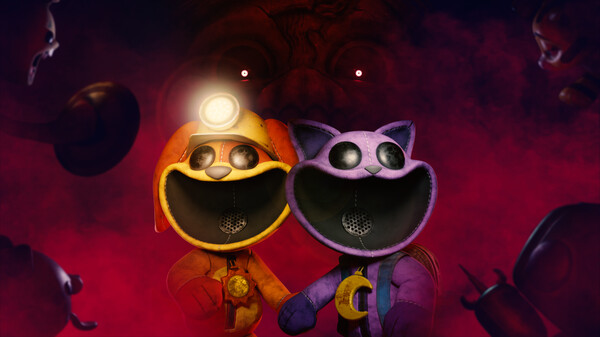
It also explains why the smaller Critters are the right frame for this game. You are not a survivor with a gun; you are a toy-sized thing in a building built for people, and your best sensor is a teammate’s voice coming from around a corner you cannot see past.
None of that survives a quiet lobby. Proximity voice is positional, so a callout from the wrong wing arrives as noise, and the useful information in a session is almost never the loudest thing said. The teams that get further are the ones that establish a habit early: name the room, name what is being carried, and say when a room has been cleared. It reads as pedantic for the first two minutes and then stops being optional the first time someone is left behind and nobody can describe where behind is.
The slap is the one tool that works on your own team, and recorded sessions show the cost immediately: a player complains that they are doing all the work because a teammate cannot stop slapping people, and the same hand that shoves a monster shoves a friend. It is not a friendly-fire toggle so much as a shared cooldown being spent in the wrong direction - a slap used on a teammate is a slap not available when something is actually on top of you. The counter-lesson is just as useful: a player reports slapping Boogie Bot and getting nothing for it, which means the verb has a target list and a boss is not on it. Learning which creatures ignore the slap is worth more than any damage number.
The belly bar is the status readout nobody explains. A player interrupts themselves mid-sentence to say the bar is full, and the same HUD carries the small teammate icon that makes a rescue possible. Read together, the interface is telling a team two different things: your own body has a reserve that fills and empties, and your friends are dots somewhere on a map you cannot see. Groups that only watch the quota counter miss both, which is how a lobby ends up with three players carrying nothing and one player poisoned in a room nobody can name.
Getting a teammate back is a logistics problem before it is a combat problem. Sessions include a vote to go back, take the loss and recover the body, and the answer from the downed player is that they must return to the land of the living - a reminder that death in this game is a wait, not an exit. The mechanics behind it are mundane: some players carry a body, some put parts together at a station, and one player describes dropping something into the right receptacle to make the rescue work. None of that happens if the team has already scattered, which is why the retreat call has to be made early enough to be obeyed.
Falling is the failure that looks like an accident and plays like a decision. A player apologises for falling in a particular way, and the shift records a demerit for it - a word that implies the game is scoring conduct and not only tribute. That reading fits the fiction: the Voice is an employer, and an employer that replaces you for failing is also an employer that notes how you failed. Treating a fall as free is the fastest way to discover that the quota was not the only number being tracked.
Proximity voice has a failure mode that no amount of talking fixes. A player jokes about turning off their flashlight and getting a teammate killed, and the joke lands because it is mechanically true: darkness is a debuff you can inflict on the person next to you, and the person who cannot see is usually the one being chased. The useful habit is not more chatter but a specific kind: announce the light, announce the battery, and say which direction you are moving when you move, because a teammate who hears footsteps but not a name has no way to tell a rescue from a threat.
There is also a division-of-labour problem that voice chat does not solve by itself. One player describes solving all the puzzles for a party of people who are not helping, which is efficient right up until the solver is the one who gets grabbed. The same session shows the group splitting to put parts together and then discovering that nobody remembered where the receptacle was. The pattern worth copying is a rotation rather than a role: whoever is closest does the interaction, and whoever is not says out loud what they are doing, so the knowledge does not live in one player's head.
Sources on record
-
Co-op sessions are built around players calling out to each other across rooms.
Tier 3, creator footage / checked 2026-10-19
-
Players move through the factory as Smiling Critters and use hiding spots and distractions.
Tier 1, first-party / checked 2026-10-19
Source identifiers, capture dates and the raw quoted lines are held in this site's research record rather than reproduced on the page, so each claim above can be checked against the original without the page itself standing in for the source.